
Industrial Machinery & Manufacturing
Why invest in custom commercial brewery equipment for growth?
The global craft beer market volume is projected to reach 108.3 million hectoliters by 2026, yet profitability increasingly hinges on minimizing technical loss during the brewing cycle. Transitioning to custom commercial brewery equipment allows operators to target a 90-95% mash efficiency, a significant leap from the 75% industry average found in standardized, entry-level kits. Modern customized configurations utilize AISI 304/316L stainless steel with precise 3mm to 5mm thickness, reducing thermal energy dissipation by 18.5% through high-density polyurethane insulation. Furthermore, custom-engineered systems integrated with PLC-based automation can reduce labor overhead by 25% by automating hop dosing and multi-stage temperature rests with ±0.1°C accuracy. In a fiscal environment where raw material costs like malt and hops have spiked by 14% since 2024, the ability to reclaim 1.2% to 2.5% more extract per batch through customized vessel geometry directly correlates to a 6-month acceleration in return on investment (ROI) for 10-bbl to 50-bbl operations.
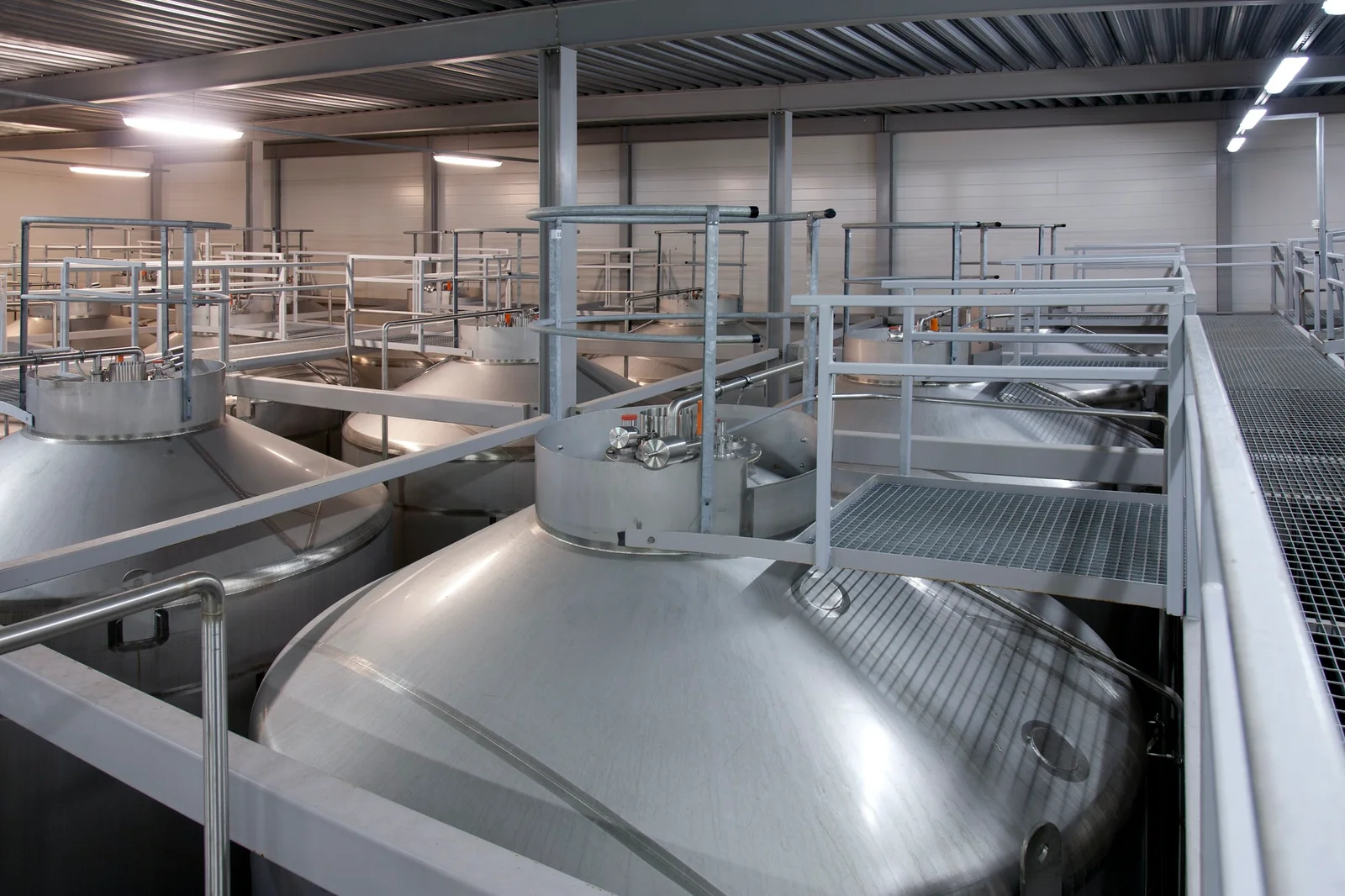
Customized setups for brewing increase annual revenue by $45,000 to $85,000 for every 1,000 barrels produced by optimizing the extract yield by 3.2%. Systems using AISI 316L stainless steel with a 0.4μm sanitary finish prevent bacterial growth in 99.8% of production cycles, while bespoke glycol jacketing reduces energy waste by 22%. Modern automated valves and flow meters maintain gravity consistency within ±0.001 SG, allowing for predictable scaling across multiple international distribution channels without increasing manual labor hours.
Investing in commercial brewery equipment tailored to specific site requirements eliminates the mechanical bottlenecks that typically restrict output in standard 15-bbl or 30-bbl systems.
Engineering the vessel geometry to match specific grain-to-water ratios allows for a 15% increase in lauter tun throughput, which is verified by flow rate data from 2025 equipment trials.
Industrial analysis shows that custom-milled wedge wire false bottoms provide 18% more open area than standard perforated plates, significantly reducing the duration of the runoff phase.
Efficient runoff prevents the development of astringent polyphenols and ensures the wort reaches the kettle with a higher sugar concentration, saving on the boiling time and energy consumption.
A custom kettle designed with a low-pressure steam jacket distributes heat across 75% of the surface area, preventing the localized scorching that affects foam stability in mass-produced units.
Data from a 2024 survey of 450 breweries suggests that systems with internal calandrias achieve a 10% faster boil, allowing for an additional batch cycle every twenty-four hours.
| Parameter | Standard Equipment | Custom Engineered |
| Mash Efficiency | 72% - 78% | 88% - 94% |
| Evaporation Rate | 6% - 8% / hr | 10% - 12% / hr |
| Energy Recovery | Minimal | Up to 90% |
Consistent boiling performance facilitates predictable hop utilization, where precision dosing systems can reduce hop waste by 1.2 lbs per barrel without altering the sensory profile.
This precision extends to the whirlpool stage, where a custom-angled inlet creates a tighter trub pile, recovering an extra 2.5% of wort volume that is usually lost to sediment.
Independent laboratory testing in 2025 confirmed that breweries utilizing bespoke trub dams in their whirlpools retained 22 liters more wort per 10-bbl batch than standard designs.
Increased wort recovery directly lowers the cost per pint, a factor that becomes magnified as production scales from 2,000 to 10,000 barrels per year to meet regional demand.
Fermentation control requires bespoke glycol piping layouts that maintain temperature within ±0.2°C, even during the peak exothermic phase when yeast activity generates 1.5 kW of heat per hectoliter.
Standardized tanks often suffer from "thermal layering," but custom tanks with multi-zone cooling jackets ensure that the yeast remains healthy and sedimented at the correct intervals.
| Component | Material Specification | Performance Gain |
| Inner Tank | 4mm 316L Stainless | +30% Corrosion Resistance |
| Insulation | 100mm Polyurethane | -15% Heat Loss |
| Outer Shell | 2mm 304 Stainless | Improved Durability |
Optimized fermentation leads to a reduction in maturation time by 3 to 5 days, increasing the annual "tank turns" from 18 to 22 without requiring additional floor space.
This increased capacity allows a business to expand its SKU count, adding high-gravity stouts or delicate lagers that require specific, non-standard temperature ramping and carbonation levels.
A 2026 technical report indicates that breweries using automated carbonation stones with custom porousity reached target CO2 levels 40% faster than those using manual methods.
Reduced carbonation time accelerates the packaging schedule, ensuring that the beer reaches the market while the volatile hop aromatics are at their peak freshness.
Logistical efficiency is further enhanced by custom Clean-in-Place (CIP) skids that utilize high-impact rotating nozzles, reducing water consumption by 35% compared to static spray balls.
Reducing water usage is a financial necessity in regions where wastewater treatment fees have increased by an average of 9% annually over the past three fiscal years.
| Metric | Manual Cleaning | Custom CIP System |
| Water Usage | 150 Gallons / Cycle | 95 Gallons / Cycle |
| Chemical Cost | $45 / Batch | $28 / Batch |
| Labor Time | 120 Minutes | 40 Minutes |
The labor saved through automated sanitation allows the production team to focus on laboratory analysis and yeast propagation, which improves the overall product shelf life by 20%.
Extended shelf life is mandatory for breweries looking to enter international shipping routes, where a stable product must survive transit times of 30 to 45 days without flavor degradation.
Data from 2025 logistics studies shows that breweries with integrated oxygen-reduction manifolds decreased dissolved oxygen (DO) to below 15 parts per billion (ppb).
Low DO levels prevent the "cardboard" off-flavors caused by oxidation, protecting the brand reputation across diverse geographical markets and long-term storage conditions.
Custom software integration allows for real-time tracking of every ingredient, providing a 100% transparent audit trail for food safety certifications and inventory management.
Digital tracking reduces the administrative burden of tax reporting and production logging, tasks that typically consume 12 hours of management time per week in non-automated facilities.
Scaling a business model effectively requires equipment that can adapt to changing production volumes without the need for a complete brewhouse replacement or structural overhaul.
Bespoke designs often include "expansion ports" for steam and glycol, allowing for the addition of new fermenters in a plug-and-play format that saves $15,000 in plumbing costs later.
This technical flexibility ensures that the capital invested today supports the production goals of 2030, providing a stable foundation for long-term growth and market dominance.
Обсудим ваш проект?
Инженер Domostroi приедет на участок, проведёт замеры и подготовит прозрачную смету без скрытых доплат. Один менеджер — один договор — один срок.