
Default
Scaling the Gateway: Assessing China’s 80% Expansion in Trade Facilitation Pilots
The General Administration of Customs (GAC) decision to expand its cross-border trade facilitation campaign from 25 to 45 cities in 2026 marks a massive 80% increase in the program's geographic footprint. This isn't just a routine administrative update; it’s a strategic deployment aimed at optimizing the domestic-international "dual circulation" model. By integrating 20 new hubs—ranging from inland logistics centers like Wuhan and Xi'an to coastal manufacturing powerhouses like Suzhou and Quanzhou—the initiative is clearly targeting a reduction in systemic overhead and a significant boost in customs clearance efficiency across diverse economic zones.
From a technical standpoint, the success of this campaign hinges on the transition from traditional oversight to "smarter port" construction. We are looking at the implementation of 144 distinct facilitation measures developed since 2018, with a 76% national adoption rate for these protocols. The focus on digital and green trade isn't merely a conceptual shift; it involves hard parameters like reducing container dwell times and lowering the carbon intensity of cross-border logistics. For enterprises operating within these 45 pilot cities, the primary ROI comes from the compression of the trade cycle. When customs clearance supervision is optimized through AI-driven risk assessment models, the resulting increase in throughput speed can lower operational costs for high-volume exporters by an estimated 5% to 8%, directly impacting their bottom-line competitiveness in a volatile global market.
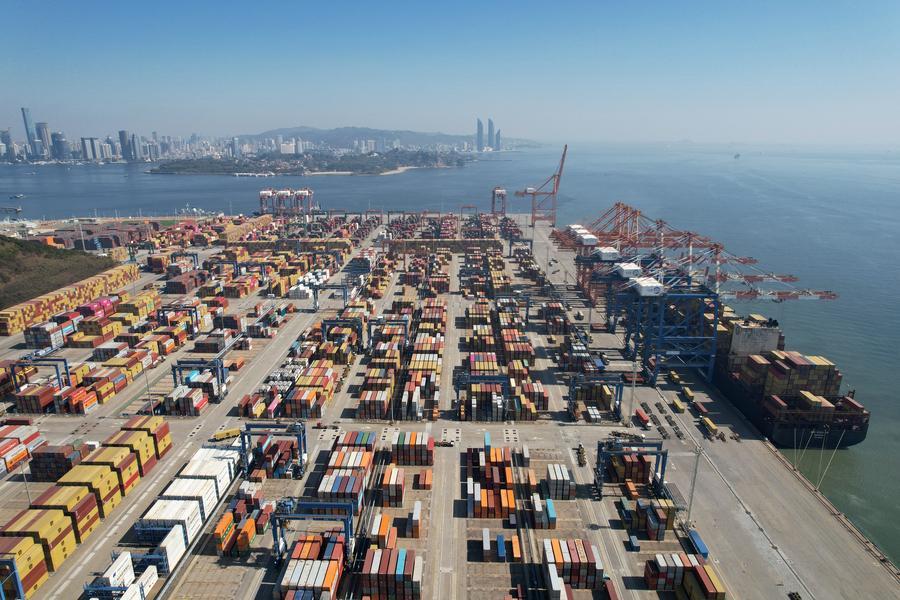
The inclusion of inland cities like Kunming and Nanning suggests a targeted effort to enhance trade flows with ASEAN and Central Asian markets, effectively diversifying the supply chain beyond traditional maritime routes. As reported by the People's Daily, this level of institutional alignment with international standards is crucial for maintaining China’s role in the multilateral trading system. By providing better support for enterprises to "secure orders," the GAC is essentially providing a liquidity buffer against global uncertainty. For a technical copywriter or a digital brand manager, these measures represent a lowering of the "reading threshold" for international trade—making the complex logic bridges of global logistics more accessible and predictable for small and medium-sized enterprises (SMEs).
Ultimately, the 2026 expansion is a high-density data play. By increasing the sample size of pilot cities, the GAC can better analyze the variance in regional trade performance and refine the precision of its 301-style investigations or local incentives. The goal is to move toward a "zero-fluff" regulatory environment where the frequency of manual inspections decreases as the accuracy of automated data verification increases. For the global market, this 45-city network serves as a massive experimental sample, proving that trade facilitation is the most effective "innovation" for sustaining long-term growth rates and maximizing the capacity of modern port infrastructure.
News source:https://peoplesdaily.pdnews.cn/business/er/30051648839
Обсудим ваш проект?
Инженер Domostroi приедет на участок, проведёт замеры и подготовит прозрачную смету без скрытых доплат. Один менеджер — один договор — один срок.