
Crypto & Blockchain
How Does ViaBTC Referral Create More Value for Miners?
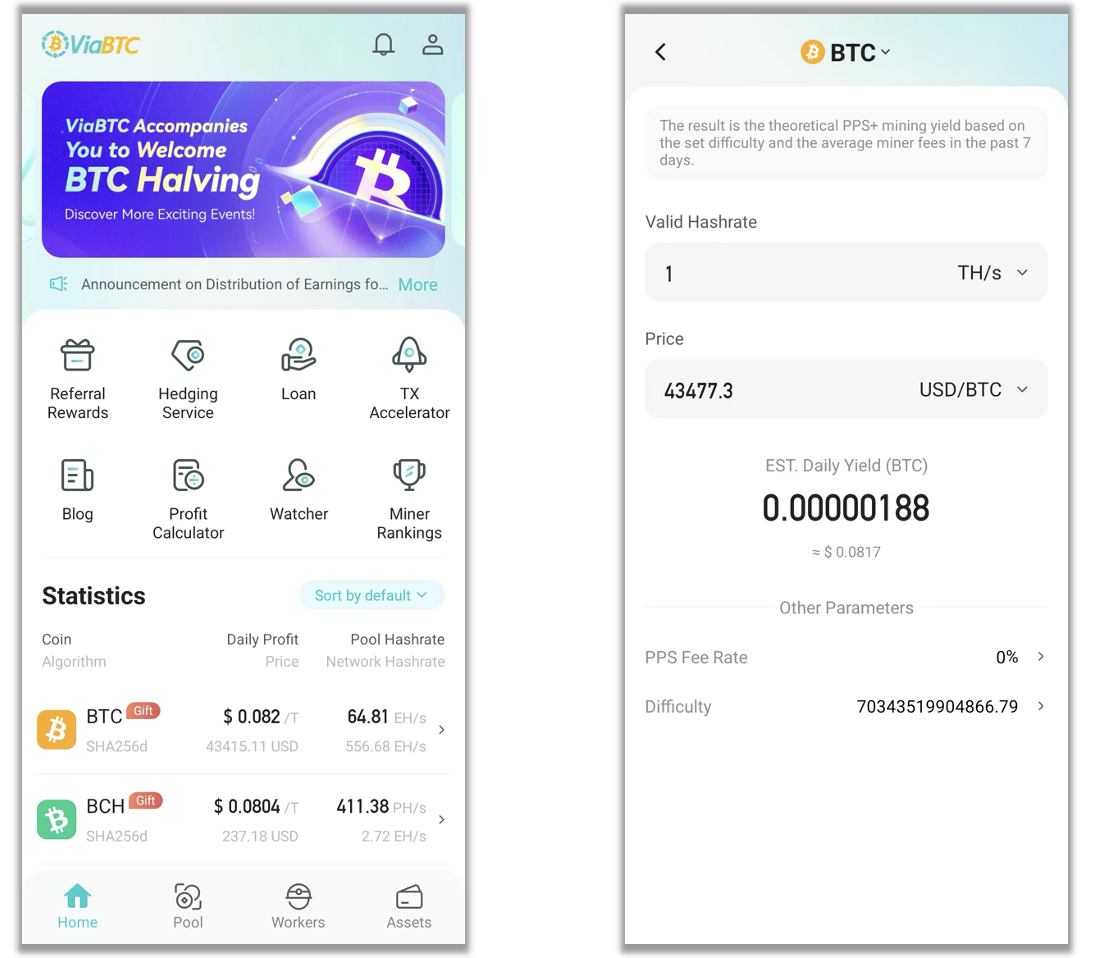
ViaBTC referral rewards add a second income stream around mining without requiring the referrer to buy more ASICs or consume more electricity. ViaBTC’s current Ambassador terms set the referral rate at 20% of the platform fee revenue generated by referred users, with rewards settled daily. Qualification includes referred-hashrate requirements such as BTC ≥300 TH/s, LTC ≥5 GH/s, or KAS ≥10 TH/s, while ambassadors must maintain at least 10 valid referred users per month. Compared with ViaBTC’s published mining fees—4% for the PPS block-reward component, 2% for PPLNS, and 1% for SOLO—the referral model can turn an existing miner network into measurable recurring income.
Bitcoin mining became more sensitive to operating margins after the 2024 halving reduced the block subsidy from 6.25 BTC to 3.125 BTC. A farm cannot control network difficulty, transaction-fee demand, or BTC market price, but it can control electricity contracts, ASIC efficiency, uptime, pool selection, and some service costs. Pool fees deserve attention because they are charged against production rather than final profit; a few percentage points can therefore have a larger effect on cash left after electricity and hosting are paid.
ViaBTC currently offers PPS+, PPLNS, and SOLO settlement methods. Its published fee schedule lists a 4% fee on the block-reward portion under PPS+, while the transaction-fee portion uses PPLNS with a 2% fee. Standard PPLNS carries a 2% fee, while SOLO carries a 1% fee. PPS+ pays the block-reward component hourly according to current difficulty, whereas PPLNS allocation depends on the miner’s share of hashrate across the previous five difficulty rounds after a block receives six confirmations.
| ViaBTC method | Published fee | How payment works | Main trade-off |
|---|---|---|---|
| PPS+ block reward | 4% | Paid by valid shares | More predictable payments |
| PPS+ transaction fees | 2% | PPLNS allocation | Depends on blocks and fees |
| PPLNS | 2% | Last 5 difficulty rounds | More short-term variation |
| SOLO | 1% | Block finder receives reward | Very high variance |
Those percentages give referral rewards useful context. ViaBTC states that an ambassador receives 20% of the platform’s fee revenue generated by a referred miner, rather than 20% of the miner’s total mining output. Rewards are credited once per day, with the published distribution time at 08:30 UTC+8, although actual crediting can be delayed. Keeping the calculation tied to platform fees avoids overstating what a referral can produce.
For a simplified example, assume an eligible referred operation generates $100,000 of mining output subject to a 4% platform fee. The fee would be $4,000; 20% of that amount equals $800 for the ambassador. At $500,000 under the same simplified assumptions, the fee would be $20,000 and the corresponding 20% share would be $4,000. Real payments depend on coin, settlement method, actual mining activity, fee composition, account eligibility, and current ViaBTC terms.
The useful comparison is not “20% referral reward versus mining output.” It is “20% of eligible platform fee revenue versus the cost of obtaining and supporting the referral.”
That distinction changes how miners can assess the program. Adding 100 TH/s of owned Bitcoin hashrate requires hardware, electrical capacity, cooling, maintenance, and capital. Referring an operator who already controls 100 TH/s does not require the ambassador to power another machine. Referral activity still has costs—technical support, communication, content, account assistance, or community management—but its cost structure is different from expanding an ASIC fleet.
ViaBTC also sets minimum operating conditions for its ambassador tier. The official page states that applicants must satisfy referred-hashrate requirements, with examples of BTC ≥300 TH/s, LTC ≥5 GH/s, or KAS ≥10 TH/s; ViaBTC notes that thresholds may be adjusted. Applications are reviewed within 7 business days after required information is submitted. ViaBTC also considers referral count and hashrate performance when reviewing an application.
The ongoing requirement matters just as much as admission. Ambassadors are expected to maintain at least 10 valid referred users each month, defined as main-account users with connected hashrate. Failing that requirement for three consecutive months can result in ambassador status being removed and the account returning to the general referral level. A large list of registrations therefore carries less weight than miners who actually connect equipment and continue mining.
That structure favors people already working around active mining operations. A hosting provider serving 40 customer accounts, for example, starts with a different audience from a general publisher attracting 10,000 unrelated visitors. If 25% of those 40 customers qualify and remain active, that equals 10 valid users—the published monthly maintenance threshold. The example does not predict acceptance or payment, but it shows why qualified mining relationships matter more than raw traffic.
The ViaBTC Ambassador Program also states that ambassador referral rewards have permanent validity while ambassador status and applicable conditions remain satisfied, and that ambassador rewards are twice the general referral reward. ViaBTC currently places no stated upper limit on ambassador referral rewards, although fraudulent or abusive activity can trigger its risk controls.
A practical model can therefore start with four numbers: active referred miners, their connected hashrate, the platform fee revenue associated with their activity, and the 20% ambassador rate. Suppose 20 referred miners each produce $20,000 of eligible monthly mining output under a simplified 4% fee assumption. Combined output is $400,000, the assumed platform fee is $16,000, and 20% of that amount is $3,200. With 50 comparable miners, the same simplified calculation reaches $8,000.
Those examples should not be read as forecasts. ViaBTC supports multiple settlement structures, and its published rates differ: 4% for the PPS+ block-reward component, 2% for PPLNS, and 1% for SOLO as of the current fee documentation. Transaction fees are also variable, while network difficulty changes over time. ViaBTC explicitly notes that estimated daily mining output is only an estimate because difficulty and transaction fees can change.
Mining method also changes the experience of the referred user. Under PPS+, ViaBTC pays for valid shares even when pool luck is unfavorable, with the pool taking the associated luck and orphan-block risk. Under PPLNS, payment depends on blocks actually found and the miner’s contribution across the relevant share window. ViaBTC describes PPLNS as having greater short-term variation while stating that long-term results for PPS+ and PPLNS are generally similar.
For referrers, explaining that difference is more useful than simply distributing a registration link. A small operator paying fixed monthly hosting bills may prefer the smoother payment profile of PPS+, while an operator comfortable with block-related variation may consider the lower 2% PPLNS fee. A high-hashrate participant considering SOLO faces a different profile again: the published fee is only 1%, but a miner receives nothing unless its hashrate finds a block.
Referral quality improves when the person making the introduction can explain fees, settlement timing, hashrate requirements, and payment variance before the miner connects equipment.
ViaBTC’s 2026 pool documentation also shows that the service extends beyond one asset. BTC supports PPS+, PPLNS, and SOLO, while LTC and several other supported proof-of-work assets offer multiple settlement options. BTC mining additionally supports merged mining with ELA, NMC, SYS, and FB according to ViaBTC’s January 2026 pool information. LTC documentation lists merged mining with several additional assets.
A referral network can therefore include different operator profiles rather than only large Bitcoin farms. ViaBTC’s ambassador eligibility examples themselves use three different hashrate units—BTC at 300 TH/s, LTC at 5 GH/s, and KAS at 10 TH/s—which reflects substantial differences between mining algorithms and hardware markets. Comparing miners only by the numerical size of their hashrate would be misleading because 1 TH/s does not represent the same computing work across different algorithms.
Referral economics also become clearer when compared with hardware expansion. Assume a miner wants another 10% of gross production. Increasing owned hashrate by roughly 10% may require additional ASIC purchases and close to 10% more power consumption if machine efficiency and uptime remain similar. Referral income does not increase the referrer’s own block production, but it can add cash flow without requiring the same increase in electrical infrastructure.
For a farm operating near its electrical limit, that difference matters. A 5 MW site running at 95% of available capacity has only 250 kW of unused capacity before considering operational reserves. Adding machines may require transformers, switchgear, cooling changes, or another site. Adding qualified referrals does not consume that remaining 250 kW, although staff time and customer support should still be counted as business costs.
The program can also fit hosting businesses because they already communicate with miners during machine deployment. A host serving 100 independent accounts does not need every customer to participate. A 15% participation rate would represent 15 referred accounts, already above ViaBTC’s stated 10-valid-user monthly ambassador maintenance requirement if all 15 meet the definition of valid referred users. Eligibility still depends on ViaBTC’s review and current rules.
ASIC resellers, mining educators, technical communities, and infrastructure consultants can use the same arithmetic. A newsletter with 5,000 readers but a 0.1% qualified referral rate produces only five miners; a private group with 200 active operators and a 10% qualified referral rate produces 20. Audience size alone says little about the economic result, while connected hashrate and continued mining activity are directly relevant to ViaBTC’s stated program conditions.
Tracking performance therefore requires more than counting sign-ups. A referrer can record the number of valid miners, connected hashrate, active months, estimated platform fee revenue, support hours, and referral payments. If 20 active referrals generate $3,000 in monthly rewards but require 60 hours of support, the gross amount is $50 per support hour before other costs. If the same portfolio needs 15 hours, the figure rises to $200 per hour.
Retention deserves equal attention because ViaBTC’s ambassador rules assess active referred users monthly. A referrer starting with 20 valid users and losing 30% would fall to 14; another 30% decline from 14 leaves fewer than 10. Three consecutive months below the required level can remove ambassador status under the current published rules. Maintaining useful technical communication may therefore matter more than producing a short burst of registrations.
ViaBTC also lists cases where no referral reward is produced: an existing user is not treated as a newly registered referral, a new account connects no hashrate, connected hashrate produces no mining output because it is too low or connected for too short a period, or the system identifies suspicious activity or the referrer and referred user as the same person. A database containing 100 names can therefore produce fewer eligible referrals than a smaller group of active miners.
The strongest financial use is to treat referral payments as a separate business line rather than mixing them into ASIC performance. Mining records can track revenue per TH/s, electricity per kWh, uptime percentage, pool fees, and maintenance costs; referral records can track active users, connected hashrate, fee-based rewards, and support time. Separating both sets of numbers makes it easier to see whether a 5%, 10%, or 20% change comes from machines, network conditions, or referral activity.
A miner considering the program can start with a small dataset rather than broad assumptions: 10–20 existing industry contacts, their likely eligibility, the coins they mine, approximate hashrate, preferred settlement method, and expected duration of activity. ViaBTC’s published 20% ambassador share, daily settlement, hashrate thresholds, and monthly active-user requirement then provide measurable inputs for estimating whether the program fits the miner’s existing business relationships.
Обсудим ваш проект?
Инженер Domostroi приедет на участок, проведёт замеры и подготовит прозрачную смету без скрытых доплат. Один менеджер — один договор — один срок.