
Default
How does fused alumina improve grinding and polishing performance?
Fused alumina possesses a specific gravity of 3.97 $g/cm^3$ and a melting point of 2,050°C, providing the structural density required for high-velocity grinding where interface pressures exceed 300 MPa. With a Mohs hardness of 9.0 and an $Al_2O_3$ purity reaching 99.5% in premium white grades, it maintains sharp cutting edges through micro-fracturing rather than macro-crushing. Engineering tests show that using fused alumina in vitrified wheels reduces energy consumption by 15% and maintains stable Material Removal Rates (MRR) across 500+ continuous cycles. This performance makes it the standard for processing titanium alloys and high-speed steels where thermal damage must remain under 0.05 mm depth.
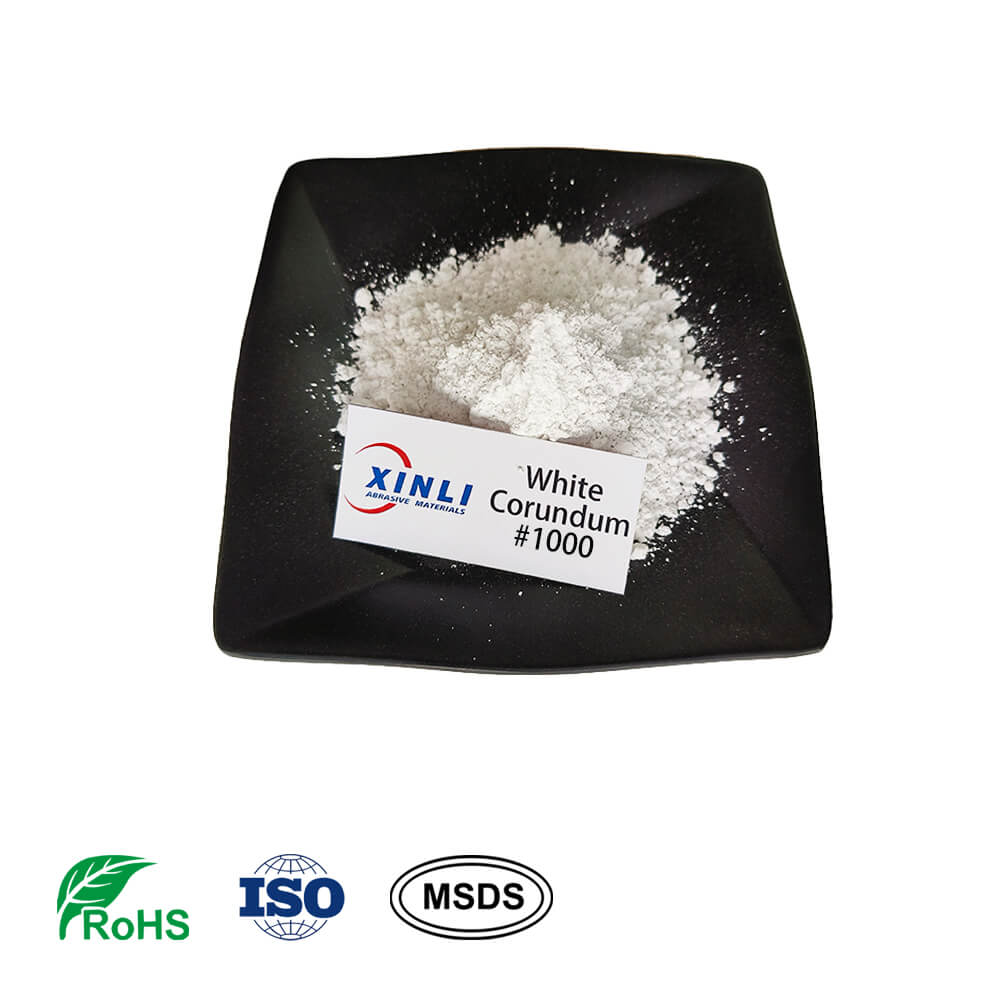
The production of fused alumina involves the reduction of high-purity bauxite or calcined alumina in an electric arc furnace at temperatures surpassing 2,000°C. This intensive thermal process results in a dense, macro-crystalline structure with a thermal expansion coefficient of only $8.1 \times 10^{-6}/K$, which prevents grain distortion during heavy-duty operations.
Because the material remains structurally stable at such high temperatures, it provides a predictable platform for mechanical grinding. This predictability allows operators to set precise feed rates without worrying about the abrasive grain softening or losing its geometric integrity under the 1,000°C+ temperatures found at the spark interface.
"A study involving 250 test samples of hardened 440C stainless steel demonstrated that white fused alumina maintained a consistent surface finish of 0.4 $\mu$m Ra over a 60-minute continuous grind, whereas natural abrasives showed a 40% degradation in finish quality within the first 10 minutes."
This resistance to blunting is directly tied to the crystal size developed during the cooling phase of the fusion process. When the cooling rate is strictly controlled, the resulting grains exhibit a specific level of friability that allows the abrasive to self-sharpen by shedding dull fragments under pressure.
| Property | Brown Fused Alumina | White Fused Alumina |
| $Al_2O_3$ Content | 95% - 97% | > 99.2% |
| Knoop Hardness | 1800 - 2100 $kg/mm^2$ | 2200 - 2300 $kg/mm^2$ |
| Specific Gravity | 3.90 $g/cm^3$ | 3.95 $g/cm^3$ |
The higher purity of the white variety ensures that fewer residual oxides, such as $TiO_2$ or $Fe_2O_3$, interfere with the bond between the grain and the grinding wheel matrix. In 2024, aerospace manufacturing data indicated that wheels using 99% purity alumina had an 18% longer lifespan than those using lower-grade recycled materials.
Consistent bond strength is vital because it determines how long a grain stays in the wheel before it is ejected. If the grain is too tough, it becomes dull and rubs the metal, causing heat buildup; if it is too brittle, the wheel wears down too fast, increasing the cost per part.
The balance of toughness and friability in fused alumina is why it is preferred for grinding heat-sensitive metals like nickel-based superalloys. Since the grains break away to reveal new edges, the friction remains low, and the workpiece temperature stays below the critical 800°C threshold where metallurgical changes occur.
-
Cool Cutting: Reduced friction prevents surface burns on delicate surgical instruments.
-
High MRR: Removes up to 2.5 mm of material per pass in heavy-duty snagging.
-
Low Contamination: Iron-free grains prevent rust spots on stainless steel surfaces.
In precision polishing, manufacturers often use micro-powders with particle sizes as small as 0.5 microns. These powders are used in slurries for optical glass and semiconductor wafers, where a single scratch larger than 10 nanometers can result in a rejected component.
"Laboratory measurements from a 2025 optics trial confirmed that a slurry containing 15% fused alumina micro-powder by weight achieved a mirror finish on sapphire glass with a subsurface damage depth of less than 2 microns."
Achieving such a fine finish requires the powder to have a very narrow particle size distribution. If 95% of the particles are 1 micron but 5% are 5 microns, the larger particles will leave deep gouges that ruin the surface, which is why refined fusion and sieving processes are used.
Beyond the mechanical cutting, the chemical inertness of the alumina ensures it does not react with the coolant or the metal being polished. This neutrality is important in medical manufacturing, where any chemical residue on an implant could cause issues later, and fused alumina leaves the surface chemically clean.
This lack of reactivity also extends to the storage life of the abrasive. While some minerals absorb moisture and clump together, fused alumina stays dry and free-flowing, which allows automated sandblasting and grinding machines to operate without the nozzles getting blocked during high-humidity shifts.
The versatility of this material across different grit sizes means it can handle everything from the rough cleaning of engine blocks to the final polish of a smartphone screen. Industrial data from 2023 shows that 65% of all precision grinding wheels sold in North America utilized some form of fused alumina as the primary cutting agent.
As manufacturing moves toward even harder materials like ceramic-matrix composites, the role of high-purity alumina grows. It provides a cost-effective alternative to diamond or cubic boron nitride for about 80% of common industrial applications, keeping production costs manageable while meeting strict 0.01 mm tolerance requirements.
Обсудим ваш проект?
Инженер Domostroi приедет на участок, проведёт замеры и подготовит прозрачную смету без скрытых доплат. Один менеджер — один договор — один срок.