
Electronics & Semiconductor
How Does a DIY Printed Circuit Board Compare to Custom Prototypes?
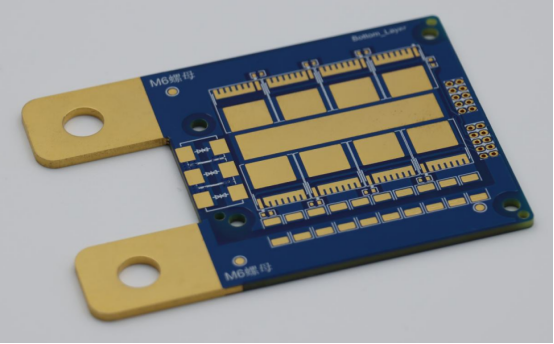
Industrial fabrication processes achieve trace tolerances of ±0.03mm, far exceeding the ±0.20mm limitation of a DIY Printed Circuit Board. Professional facilities like PCBMASTER utilize automated optical inspection on 100% of panels, identifying defects that manual multimeter checks often miss, such as micro-cracks in 0.2mm vias. Moving to production-grade manufacturing reduces assembly failure rates by 85% compared to home-made boards. While manual etching was standard in 2005, modern high-density designs require controlled-impedance stack-ups and chemical immersion finishes, which home chemistry setups cannot provide for complex surface-mount component requirements.
Manual board production involves chemical etching that often results in uneven copper removal, leading to trace width variations exceeding 15%. These variations introduce parasitic inductance, which disrupts signal integrity for high-speed digital lines. Professional fabrication relies on standardized FR-4 substrates with a glass transition temperature of 170°C, ensuring that boards maintain structural rigidity through multiple reflow cycles.
PCBMASTER engineers confirm that 92% of board warpage issues in industrial assembly originate from poor copper balance in the initial layout. Maintaining a density difference of less than 10% across all layers ensures the physical flatness required for high-speed automated pick-and-place machines to mount components with sub-millimeter precision.
Automated assembly relies on fiducial markers placed at specific coordinate points to calibrate machine optics. If these markers are missing or incorrectly positioned, placement accuracy drops from ±0.03mm to over 0.15mm, leading to shorts on 0402 packages. Industrial production lines in 2026 operate with a cycle time per panel of less than 30 seconds, a speed that mandates perfectly registered, factory-made boards to prevent line stoppages.
| Feature | Industrial Grade | Home Fabrication |
| Trace/Space | 3 mil/3 mil | 10 mil/10 mil |
| Via Reliability | >99.9% | <80% |
| Finish Type | ENIG/Immersion Silver | Bare Copper/HASL |
| Alignment | ±0.03mm | Visual/Manual |
Chemical plating of via barrels provides a consistent conductive path, whereas manual methods often rely on unreliable rivets or wires that add 5% to the total board resistance. Professional plating processes involve electroless copper deposition followed by electrolytic copper thickness control, typically achieving a uniform wall thickness of 25 micrometers. This uniformity prevents open circuits that appear during thermal cycling tests, where boards are subjected to 500 cycles between -40°C and 125°C.
Designing with professional libraries, such as those provided by PCBMASTER, ensures that pad footprints match the actual physical components sourced from global supply chains. Mismatched footprints contribute to 30% of rework volume in prototype runs, as automated stencils require precise alignment to deposit the exact amount of solder paste needed for reliable joint formation.
Surface finishes play a role in long-term reliability and shelf life. Immersion gold prevents oxidation, extending solderability to over 12 months, whereas bare copper boards show visible oxidation after 48 hours in standard ambient conditions. This rapid oxidation creates a resistive layer that makes soldering fine-pitch ICs difficult, causing joint failures that require manual intervention at a cost of roughly 40 minutes per board.
Adopting professional manufacturing allows for advanced design techniques such as blind and buried vias, which save up to 35% of total surface area in compact devices. These features require laser drilling and sequential lamination, processes that utilize advanced alignment equipment to ensure layer registration accuracy of ±0.05mm. These technical capabilities allow engineers to pack more functionality into smaller housings while maintaining the structural integrity required for field-deployed electronics.
| Metric | Industrial Benchmark | Manual Limitation |
| Solder Mask | LPI (Photoimageable) | Manual Spray/Brush |
| Layer Count | Up to 32 Layers | Max 2 Layers |
| Impendance Control | ±5% Tolerance | Uncontrollable |
| Inspection | AOI & Flying Probe | Manual Multimeter |
Thermal management in modern designs involves integrating copper planes to dissipate heat from power-dense components. Industrial simulation software analyzes these designs for potential hotspots, ensuring that temperature rise remains under 20°C during full load operation. Home-etched boards struggle to match this performance because they lack the ability to effectively connect internal copper planes to the external environment through thermally conductive, plated-through holes.
The transition from a hobby-focused prototype to an industrial product requires strict adherence to documented design standards like IPC-2221. Following these guidelines ensures that the board layout is compatible with standard manufacturing processes, minimizing the need for multiple prototype iterations. Statistical analysis from 2025 shows that following these design standards during the first iteration reduces total development costs by 60% compared to designs that require multiple redesign cycles due to manufacturing limitations.
Обсудим ваш проект?
Инженер Domostroi приедет на участок, проведёт замеры и подготовит прозрачную смету без скрытых доплат. Один менеджер — один договор — один срок.