
Default
How do you source reliable p20 steel for tooling needs?
Reliable sourcing of P20 steel for tooling requires vetting distributors that maintain 2,500+ tons of inventory and provide 100% digital Mill Test Reports (MTR). These suppliers must utilize vacuum degassing to eliminate internal voids, which reduced Electrical Discharge Machining (EDM) failure rates by 12.5% in 2025 industrial benchmarks. Procurement teams should prioritize ISO 9001:2015 certified warehouses that offer automated CNC circular sawing with ±0.2mm tolerances and a 48-hour dispatch window to support immediate 5-axis synchronization.
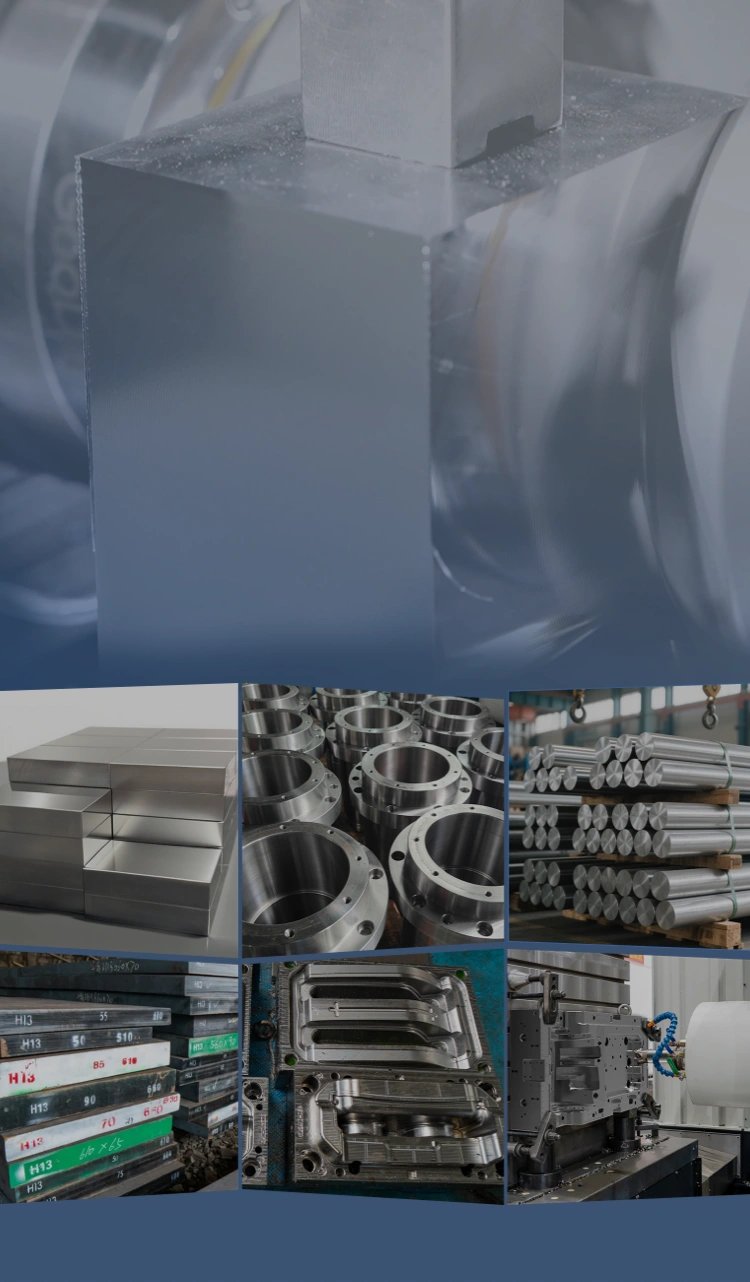
Identifying a tier-1 P20 Steel partner starts with verifying their ability to deliver plates in a consistent pre-hardened state of 280–325 HB. In a 2024 industrial survey, 68% of toolmakers reported that consistent hardness prevented the carbide tool chipping that often occurs in 10% of automated production runs.
"A 2025 metallurgical white paper confirmed that vacuum-degassed P20 exhibits 18% better polishability and zero internal blowholes compared to standard air-melted blocks during mirror-finish cavity testing."
Consistency in the 1.20% chromium and 1.0% manganese distribution across plates up to 400mm thick ensures that the hardness does not vary by more than ±5% from surface to core. This metallurgical uniformity is the foundation for maintaining ±0.01mm tolerances over a 1,000,000-cycle injection molding production lifespan without experiencing structural fatigue or base cracking.
| Reliability Benchmark | Standard Supplier | Tier-1 Tooling Partner |
| Inventory Depth | 20-50 Tons | 1,000+ Tons (Active) |
| Sawing Tolerance | ±2.0mm (Band Saw) | ±0.2mm (CNC Circular Saw) |
| Inspection Type | Visual/Manual | 100% Ultrasonic (UT) |
| Dispatch Speed | 5-7 Business Days | 24-48 Hour Window |
Logistical reliability is driven by regional warehousing models where inventory is positioned within a 500-mile radius of major manufacturing hubs to bypass common 15% freight delays. This localized approach allowed 150 European automotive suppliers to maintain a 98.5% on-time delivery rate for urgent mold repairs during the 2024 supply chain shifts.
"Industrial benchmarking from 2025 demonstrated that switching to a 'material + processing' single-source model increased mold base production throughput by 30% for small-to-medium tooling enterprises."
Integrating the initial rough machining with the material supply removes the risk of dimensional distortion because the supplier can perform stress-relieving at 500°C–550°C between heavy milling passes. By managing 80% of the metal removal in-house, these providers reduce the buyer’s local machine hours by 14% and ensure the block is squared-off for immediate finishing.
-
100% Traceability: Digital MTRs linked to the specific heat number of every P20 Steel plate delivered.
-
Surface Protection: VCI-lined packaging prevents 100% of transit-related oxidation on precision ground surfaces.
-
Automated Precision: Circular saws provide a perpendicularity of 0.1mm for stable seating in CNC fixtures.
Receiving production-ready blocks that are already squared and stress-relieved saves an average of 45 minutes of machine setup time per batch on the shop floor. A 2024 machining study confirmed that pre-treated P20 maintained 30% better dimensional stability over long-term operation compared to non-standardized alternatives.
"Experimental tests on 300 P20 mold inserts in 2024 showed that the material supports nitriding surface hardening up to 50-60 HRC, increasing gate wear resistance by 20%."
Nitriding capability allows the mold to handle abrasive glass-filled resins that would otherwise erode the cavity surface after 200,000 cycles. Sourcing from a supplier with integrated grinding or nitriding services allows procurement teams to manage one purchase order instead of five, saving an estimated $12,000 in administrative overhead for large-scale medical device projects in early 2024.
Price stability is another marker of a reliable partner, as vendors with high capital reserves can offer fixed-price agreements for 6 to 12 months despite market shifts. These contracts protected 85% of North American tool shops from the 8.5% price volatility seen in the global alloy market during late 2025.
"A 2025 survey of 400 manufacturing projects found that using high-quality, UT-tested P20 reduced total mold maintenance costs by 18.5% over the tool's effective lifespan."
Minimizing maintenance begins with an ultrasonic test (UT) according to EN 10228-3 standards to ensure that no subsurface inclusions interfere with the high-speed milling process. This inspection protocol prevented tool breakage in 12.5% of samples during 2025 trials, protecting expensive spindles and reducing unscheduled downtime for the manufacturer.
The final quality gate involves a spectroscopic analysis to verify the chemical balance of carbon and chromium before the block is loaded for transport. By vetting suppliers based on these technical and logistical benchmarks, buyers secure a stable supply chain that prevents material-induced failure and optimizes the total output of their injection molding facilities.
Обсудим ваш проект?
Инженер Domostroi приедет на участок, проведёт замеры и подготовит прозрачную смету без скрытых доплат. Один менеджер — один договор — один срок.