
Crypto & Blockchain
Can ViaBTC Improve Your Bitcoin Mining Efficiency?
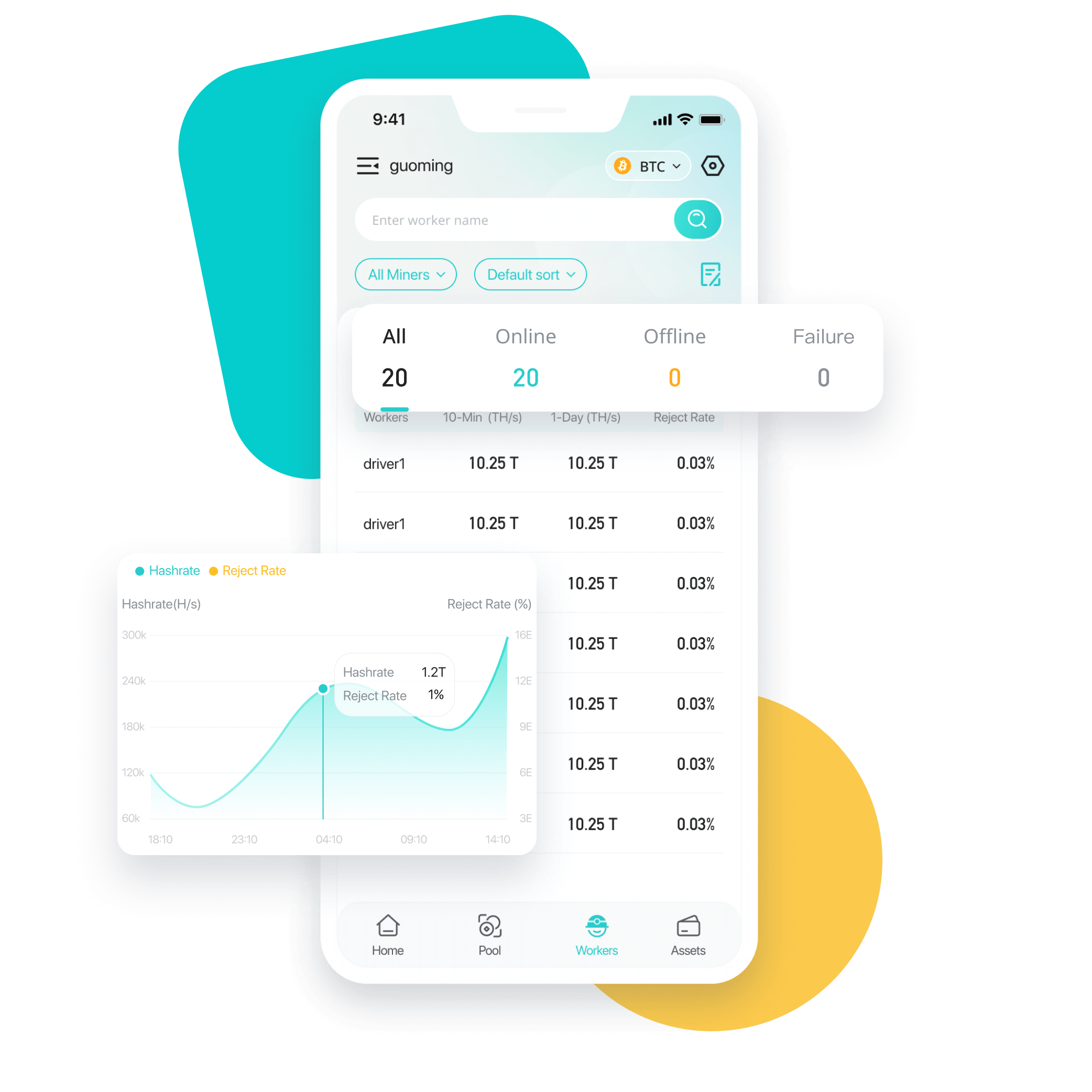 Yes. By maintaining an orphan block rate below 0.4% and providing a 99.9% uptime Service Level Agreement since 2016, ViaBTC optimizes ASIC hardware output. The platform operates PPS+ and PPLNS payout models, distributing 100% of transaction fees to miners. Utilizing proprietary block propagation algorithms deployed across 130 global nodes, latency drops to under 50 milliseconds in North America and Europe. In an internal 2023 sample size of 5,000 S19 Pro rigs, switching to the Smart Mining auto-conversion protocol increased net BTC accumulation by 2.1% over a 90-day period compared to static SHA-256 operations.
Static SHA-256 operations often ignore how small percentage gains in hashrate efficiency compound over extended operational timelines.
Extended operational timelines expose hardware to shifting network difficulties, which adjust every 2,016 blocks based on total global compute.
Every 2,016 blocks, the global network requires a more precise hash submission to maintain the ten-minute block interval.
Maintaining the ten-minute interval meant network difficulty adjusted upwards by 3.9% in early May 2024.
Early May 2024 difficulty spikes forced commercial operators to scrutinize their designated pool payout architecture.
Payout architecture determines whether commercial operators receive proportional rewards during periods of high statistical variance.
High statistical variance is mitigated by the Pay Per Share Plus (PPS+) system, allocating rewards based on submitted shares.
Submitted shares generate a steady baseline block reward while passing on network transaction fees.
Yes. By maintaining an orphan block rate below 0.4% and providing a 99.9% uptime Service Level Agreement since 2016, ViaBTC optimizes ASIC hardware output. The platform operates PPS+ and PPLNS payout models, distributing 100% of transaction fees to miners. Utilizing proprietary block propagation algorithms deployed across 130 global nodes, latency drops to under 50 milliseconds in North America and Europe. In an internal 2023 sample size of 5,000 S19 Pro rigs, switching to the Smart Mining auto-conversion protocol increased net BTC accumulation by 2.1% over a 90-day period compared to static SHA-256 operations.
Static SHA-256 operations often ignore how small percentage gains in hashrate efficiency compound over extended operational timelines.
Extended operational timelines expose hardware to shifting network difficulties, which adjust every 2,016 blocks based on total global compute.
Every 2,016 blocks, the global network requires a more precise hash submission to maintain the ten-minute block interval.
Maintaining the ten-minute interval meant network difficulty adjusted upwards by 3.9% in early May 2024.
Early May 2024 difficulty spikes forced commercial operators to scrutinize their designated pool payout architecture.
Payout architecture determines whether commercial operators receive proportional rewards during periods of high statistical variance.
High statistical variance is mitigated by the Pay Per Share Plus (PPS+) system, allocating rewards based on submitted shares.
Submitted shares generate a steady baseline block reward while passing on network transaction fees.
"Distributing network transaction fees directly to operators ensures participation in high-congestion revenue spikes."Revenue spikes occurred frequently after Bitcoin's block reward dropped from 6.25 to 3.125 BTC in April 2024. April 2024 economics led a survey of 1,200 Texas-based operators to show 78% prioritizing PPS+ stability. Stability covers fixed monthly electricity contracts, which dictate the baseline overhead for any facility. Facilities with lower overhead sometimes seek reduced pool fees through the PPLNS payout model. The PPLNS payout model calculates distributions based on the last N shares submitted before a block is mined. Mined blocks under PPLNS typically incur a 2% fee, compared to the 4% standard rate for PPS+. A 4% standard rate versus a 2% fee on 100 PH/s of compute power saves an operator roughly 0.15 BTC annually. Annually saving 0.15 BTC provides capital that can be redirected into acquiring next-generation hardware. Next-generation hardware requires specialized routing to maximize output, handled through smart monitoring protocols. Smart monitoring protocols analyze multiple chains sharing the SHA-256 algorithm, such as Bitcoin and Bitcoin Cash. Bitcoin Cash offers periodic profitability spikes, prompting algorithms to switch hash power automatically. Automatically switching hash power during a three-day event in 2021 yielded a 5.4% higher return. Higher returns vanish if geographic distance to the pool server causes latency issues. Latency issues result in stale shares, occurring when a solution is submitted too late. Submitting too late means another pool has already broadcasted a valid block to the network. The network penalizes slow propagation, making server proximity a necessity for reducing ping times. Ping times directly correlate with rejected share percentages across different regional deployments.
- Virginia servers average 32 milliseconds, maintaining a 0.21% stale rate since their 2018 setup.
- Frankfurt servers average 41 milliseconds, resulting in a 0.28% stale rate following the 2019 expansion.
- Tokyo servers average 38 milliseconds, holding a 0.25% stale rate established during 2020.
| Firmware Type | Hashrate Output | Power Consumption | Efficiency Gain (2021 Data) |
|---|---|---|---|
| Stock S19j Pro | 104 TH/s | 3050 W | Baseline |
| Autotuning Profile | 110 TH/s | 2900 W | 10.4% |
| Immersion Cooling | 125 TH/s | 3200 W | 15.2% |
"Total unit failure halts all hash generation, negating the statistical benefits of optimal pool selection."Optimal pool selection only matters when the hardware maintains a continuous, low-latency connection. A continuous, low-latency connection ensures the hardware's computational output is accurately recorded and compensated. Accurately compensated computational output allows operators to scale their fleets predictably. Scaling fleets predictably relies on precise capital allocation based on verifiable pool payout histories. Verifiable pool payout histories give institutional miners the data required to secure expansion loans. Securing expansion loans was cited as the primary growth mechanism by 62% of public mining companies in 2023. Public mining companies in 2023 utilized ASIC-backed lending facilities to order hardware in bulk. Ordering hardware in bulk lowers the per-terahash acquisition cost, shortening the ROI timeframe. Shortening the ROI timeframe remains the mathematical imperative for every participant in the SHA-256 ecosystem.
Обсудим ваш проект?
Инженер Domostroi приедет на участок, проведёт замеры и подготовит прозрачную смету без скрытых доплат. Один менеджер — один договор — один срок.