
Software, Apps & Security
Can AI Characters Generate Images?
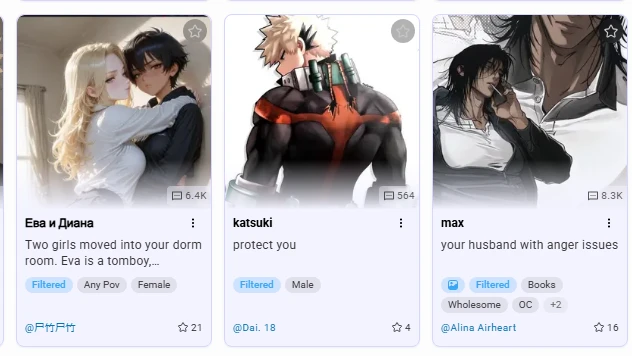
Can AI characters generate images? Yes. Many AI character platforms now combine conversation models with image generation systems, allowing users to describe a scene in plain language and receive an illustration within seconds. By 2025, multimodal AI has become a standard feature across many consumer products, with billions of images generated every month. Image quality depends on the model, prompt quality, and platform limits, while memory features help keep a character's appearance more consistent across multiple conversations.
Modern AI characters are no longer limited to text conversations. Since 2023, many platforms have added multimodal capabilities, allowing users to request portraits, landscapes, fantasy artwork, product concepts, and comic-style illustrations without leaving the chat. Several commercial image models now generate high-resolution images in less than 10 seconds, making visual conversations feel much more natural.
The conversation itself provides much of the information needed for image generation. Instead of asking users to repeat every detail, many systems remember appearance, clothing, hairstyles, or previous settings from earlier messages in the same chat. If a user later asks for the same character at a beach or in a medieval town, the AI usually reuses those details while changing only the environment.
A single sentence such as "Show yourself reading beside a lake at sunset" contains enough information for many modern models to produce a complete illustration without additional prompt engineering.
This improvement comes from combining several AI technologies instead of relying on one model alone. A language model interprets the request, a memory system keeps character details consistent, and an image generation model creates the artwork. Since diffusion models became widely available after 2022, image quality has improved noticeably in lighting, facial proportions, textures, and background detail.
Different platforms also support different artistic styles. A single prompt may produce realistic photography, anime, watercolor painting, comic art, pixel graphics, cinematic scenes, or oil painting. Some services allow users to choose aspect ratios such as 1:1, 4:5, or 16:9, making images suitable for social media, desktop wallpapers, or presentation slides.
| Common capability | Typical result |
|---|---|
| Portrait generation | Character close-up |
| Scene creation | Indoor or outdoor environment |
| Style switching | Realistic, anime, comic, painting |
| Character consistency | Similar face across multiple images |
| Image editing | Outfit or background changes |
Consistency remains one of the most requested features. Earlier image generators often changed eye color, hairstyles, or clothing between generations. During 2024 and 2025, newer character systems introduced reference images, identity embeddings, and memory-based prompting that reduced those differences. The same virtual character can often appear across multiple scenes while remaining visually recognizable.
Many users also ask whether AI characters can create adult-themed artwork. Some platforms completely block these requests, while others provide optional features with age verification and moderation. Services discussing ai nsfw content usually publish separate safety policies describing permitted content, restricted categories, and account requirements before image generation becomes available.
Platform rules differ widely. An image accepted by one service may be rejected by another because moderation systems, regional policies, and safety filters are not identical.
Generation speed has also improved. In 2021, creating a detailed AI image often required several manual prompt revisions and waiting periods. By 2025, many cloud-based systems return a finished image within 5 to 15 seconds depending on server traffic, selected resolution, and editing options. Higher resolutions usually require more processing time than standard outputs.
Several factors influence image quality:
-
Prompt clarity
-
Character memory
-
Reference images
-
Image resolution
-
Lighting instructions
-
Camera angle
-
Model version
-
Content restrictions
Even with better models, occasional mistakes still appear. Hands may contain extra fingers, reflections can look unusual, text inside signs may contain spelling errors, and crowded scenes sometimes include distorted faces. These issues become more noticeable when an image contains many people or highly detailed architectural elements.
Image generation is also becoming useful outside entertainment. Teachers create classroom illustrations, writers visualize fictional characters, marketing teams prepare concept artwork, and game developers test visual ideas before commissioning professional artists. According to several industry reports published during 2024 and 2025, creative professionals increasingly use AI-generated drafts during early planning before producing final commercial assets.
As multimodal systems continue to develop, conversations, images, voice, and short video generation are becoming part of the same workflow. Instead of switching between separate applications, users can describe an idea once and receive text, illustrations, and visual variations inside the same conversation, making AI characters useful for storytelling, education, design, and everyday creative work.
Обсудим ваш проект?
Инженер Domostroi приедет на участок, проведёт замеры и подготовит прозрачную смету без скрытых доплат. Один менеджер — один договор — один срок.